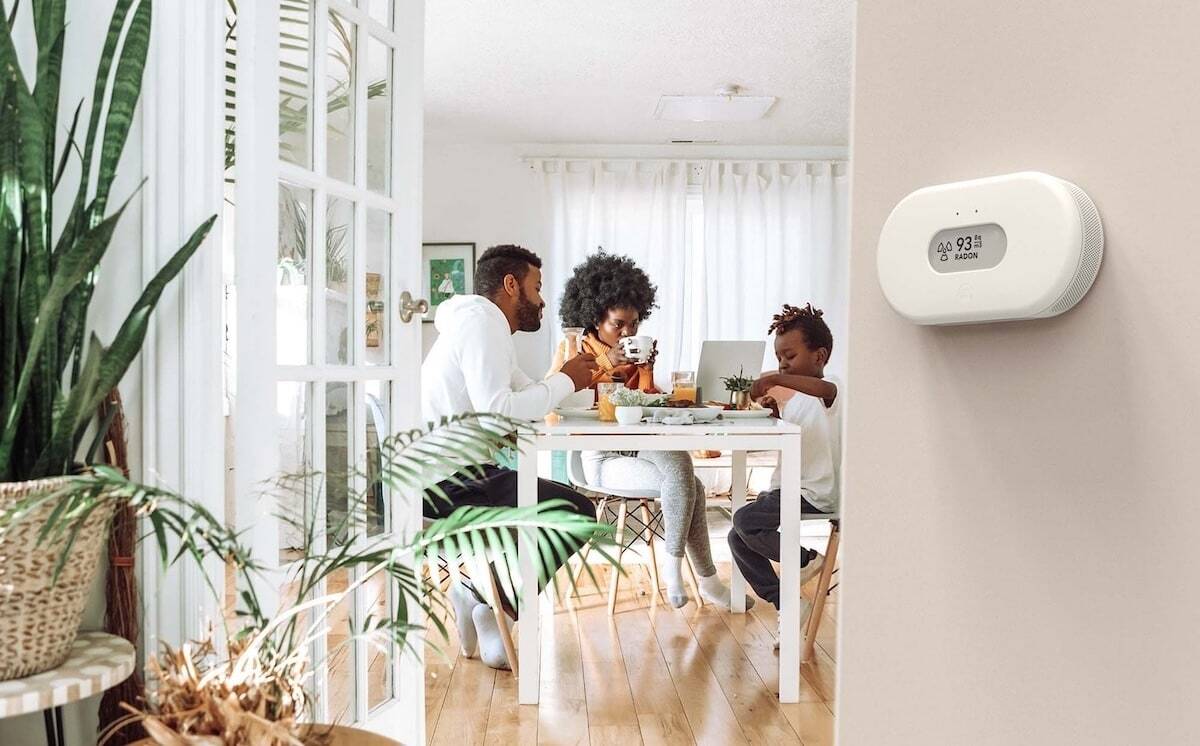
A plain-English guide to indoor air quality: the four things worth measuring — radon, PM2.5, CO2 and VOCs — and what to watch in your kitchen, bedroom and bathroom.
You think about clean food and water — but not the air you breathe 20,000 times a day. Here's what actually matters, room by room.
You filter your water. You read the labels on your olive oil. You bought the organic mattress. But here's the input you're not thinking about — the one you take in roughly 20,000 times a day, mostly indoors, often in rooms with the windows shut: your air.
Indoor air is where the modern wellness conversation goes quiet, and it shouldn't. The EPA has long noted indoor air can be more polluted than the air outside, and most of us spend the vast majority of our lives inside. The stuff that builds up in a closed bedroom or a kitchen mid-sear isn't visible — which is exactly why it's easy to ignore, and exactly why it's worth measuring.
At LAeats, we curate the cleanest version of how you eat, drink, sleep, and take care of yourself. Air is the through-line nobody talks about. Here's the plain-English version of what to measure, and where.
What's actually worth measuring
CO2. Not dangerous at household levels, but a beautiful proxy for ventilation. When CO2 climbs in a closed bedroom overnight, it tracks with that groggy, didn't-quite-rest feeling.
Particulate matter (PM2.5). The fine particles from cooking — searing, frying, gas burners — plus candles and wildfire smoke (a very LA problem). If you cook, your kitchen is your highest-PM room, full stop.
VOCs. Volatile organic compounds off-gas from cleaning products, fragrance, new furniture, and paint. The bathroom and freshly furnished rooms are the usual culprits.
Radon. The one most people have never tested for and should — an odorless radioactive gas that seeps up from the ground and is a leading cause of lung cancer in non-smokers. You can't sense it. You can only measure it.
Add humidity (mold risk above ~60%), plus — if you care about sleep — noise and light, and you have a complete picture of a room.
Room by room
The kitchen and living room are your particulate hotspot. Every time you sear salmon or run a gas burner, PM2.5 spikes — and lingers if the air isn't moving. Measuring here turns "should I run the hood?" into a number you watch fall.
The bedroom is about recovery. CO2 buildup overnight, plus noise and light, quietly shape how you actually sleep — crack a door or window and watch the morning fog lift with the numbers.
The bathroom is humidity and VOCs: steam that feeds mold, plus whatever's in your cleaning and personal-care products — an early-warning system for the mold you don't see until it's a problem.
Ready to put a number on your own air? See our full Airthings air monitors review — the three we tested, scored, and which one to buy for each room.
FAQ
Is indoor air really worse than outdoor air? It can be. The EPA notes indoor levels of some pollutants are often higher than outdoors, and we spend most of our time inside.
Which one room should I measure first? The kitchen if you cook (PM2.5), or the bedroom if you care about sleep (CO2). Both are eye-opening.
Do I need to test for radon? It's the one pollutant you can't sense and a leading cause of lung cancer in non-smokers — so yes, at least once, especially on lower floors.
This guide reflects our own testing and research. Informational only — not medical advice.